
Why traders and investors remain easy targets
Financial scams do not work because victims are foolish. They work because markets reward speed, conviction, and action, which are the same conditions scammers exploit. A trader is trained to react to opportunity. A fraudster dresses pressure up as opportunity, then waits for habit to do the rest. That is why scams keep finding buyers in bull markets, bear markets, crypto cycles, penny stock runs, forex chatrooms, and private messaging apps. Regulators keep repeating the same warning in slightly different language: fraud usually starts with a pitch that feels urgent, unusually profitable, and oddly frictionless.
For market participants with basic knowledge, the danger is not only obvious boiler room nonsense. The bigger problem is the modern scam that borrows the look of legitimate market plumbing. It may use a polished website, copied registration numbers, a fake app, a cloned firm name, a customer support desk, and a dashboard that shows gains which do not exist. In futures, forex, securities, and digital assets, the outer shell can look professional enough to pass a quick glance. The trap is that many people still judge safety by design, responsiveness, or social proof instead of by legal status, withdrawal reality, and independent verification. FINRA, the SEC, the CFTC, and the UK FCA all point investors back to the same discipline: verify the firm and the person through official records, not through what the promoter sends you.
It also helps to separate fraud from ordinary trading loss. A losing trade is not a scam just because it hurt. A scam exists where deception is doing the work. That can mean fake regulation, fake performance, fake custody, fake liquidity, fake account statements, or a real product sold through materially false claims. This distinction matters because frustrated traders sometimes chase reimbursement for bad decisions, while actual scam victims delay reporting because they blame themselves for “just trading badly.” Fraudsters adore that confusion. It buys them time.
Anyone serious about market safety should treat scam prevention the same way they treat risk management: as routine, not drama. The broad background reading at the DayTrading.com safety hub is useful for that mindset, and the wider DayTrading.com index helps place broker, platform, and market education in one place. The point is simple. Due diligence is not a side quest. It is part of execution.
What a financial scam looks like in practice
Most financial scams follow a familiar structure. The criminal creates trust, creates momentum, then creates payment. Trust may come from a social profile, a group chat, a fake mentor role, a supposed account manager, or a cloned corporate identity. Momentum comes from urgency, selective proof, and a story that explains why you must act before checking. Payment comes once the victim accepts a channel the scammer controls, whether that is a bank transfer, card deposit, crypto wallet, remote access session, or “tax” payment to unlock withdrawals. The surface changes, the machine underneath does not.
The fake broker remains one of the cleanest examples. A site offers leveraged trading, fast onboarding, low spreads, and a friendly account manager. Deposits are easy. Small withdrawals may even work at first, which is a nasty little trick because a successful early withdrawal often lowers scepticism better than any sales pitch. Once the account balance is larger, the friction begins. Suddenly there is a verification fee, a tax charge, a margin shortfall, or a compliance hold. None of this is real in the way it is presented. It is just staged resistance between the victim and their money. Regulators repeatedly warn that scammers may imitate registered firms or misuse registration details to appear legitimate. The FCA’s warning list exists largely because cloned and unauthorised firms keep doing exactly that.
Another version is the social media stock or crypto tip scam. Here the fraudster does not always need a fake platform. They only need attention. The pitch can appear in Discord servers, Telegram channels, X posts, WhatsApp groups, livestreams, or private messages. The scam may involve a coordinated pump, paid promotion disguised as research, or false claims about catalysts and inside knowledge. The SEC has warned investors not to rely on anonymous group chats for investment decisions, and FINRA has published separate guidance on pump and dump mechanics in low priced securities. That warning is old in spirit but very current in method. The channel changes, the con stays put.
Relationship investment scams sit in a darker corner because the trust is personal rather than financial at first. The CFTC describes these as romance frauds or relationship investment scams, often built through dating apps, social media, messaging apps, and even random texts. The victim is not sold an “investment” on day one. They are groomed. Once confidence is built, the target is nudged toward forex or crypto trading on a fraudulent platform that shows invented profits. This is one reason smart people still get hit. They are not buying a cold pitch from a banner ad. They are acting inside a relationship that has been engineered for weeks.
Then there is the recovery scam, which is insult laid on injury. After a victim loses money, someone appears claiming they can get it back for a fee. They may pretend to be a regulator, lawyer, tracing specialist, exchange officer, or anti fraud consultant. In reality, they are just a second scammer reading from the first scammer’s script. Regulators frequently warn that imposters pose as agencies and tell consumers to move money “for protection” or pay in advance to unlock help. A real regulator does not cold message you on WhatsApp asking for a release charge. That sentence should not need writing, but here we are.
The red flags that matter most
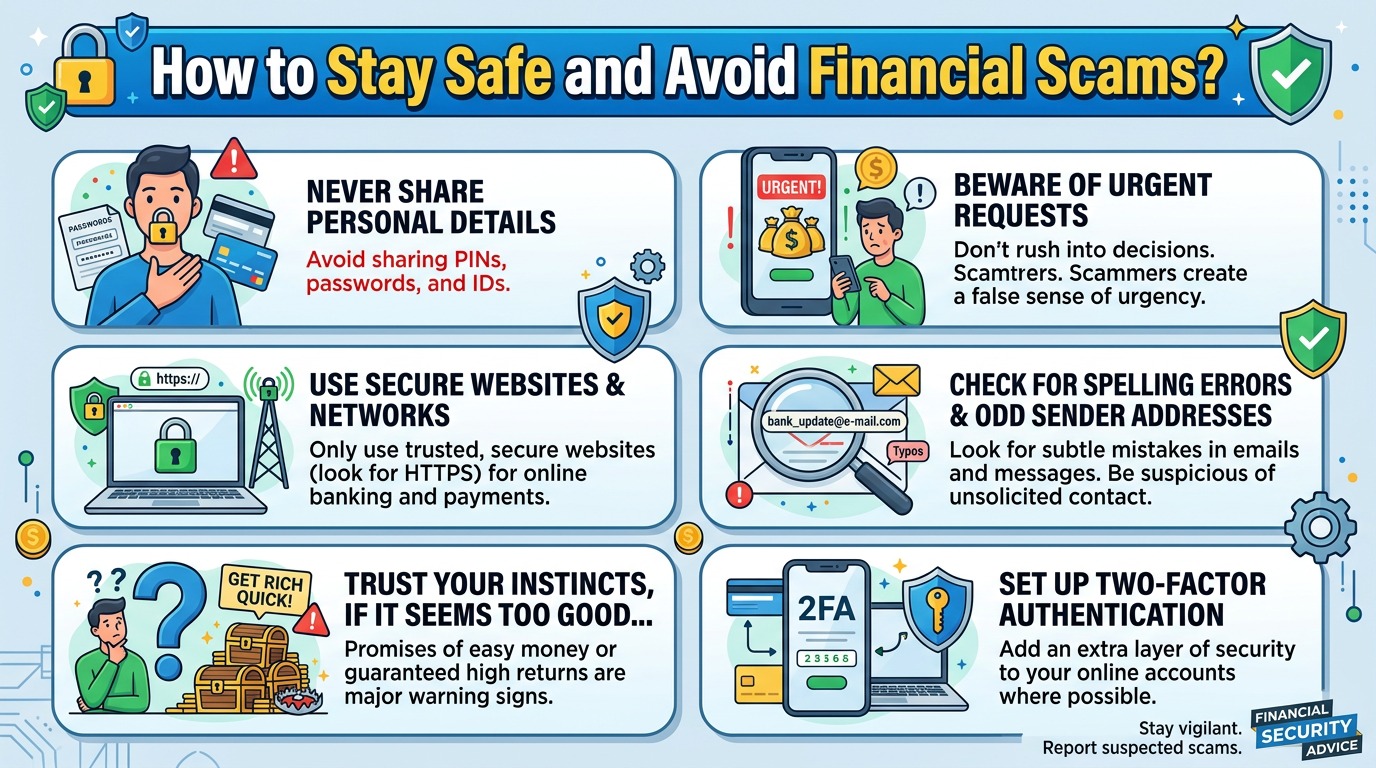
The clearest red flag is a promise that does not belong in real markets. That includes guaranteed returns, very high returns with little or no risk, or a strategy described as “safe” despite obvious exposure to leverage, concentrated positions, illiquid assets, or speculative instruments. Markets do not owe certainty to anyone. Even products sold as lower risk still carry risk. When a promoter acts as if risk can be waved away by confidence, technology, or access, you are no longer listening to analysis. You are listening to sales theatre. The FTC and SEC both warn that outsized promises paired with low risk language are classic fraud signals.
Urgency is another major tell. Fraudsters love clocks. The opportunity closes today. The allotment window ends in an hour. The withdrawal must be fixed now. Compliance needs payment by close of business. A legitimate firm may impose deadlines, but it can also explain them clearly, document them properly, and direct you to information you can verify outside the conversation. A scammer needs speed because verification is hostile to fraud. The longer you take, the more chance you have to notice that the domain was registered recently, the support number changes, the legal entity is missing, or the regulator has already warned about the name.
Secrecy is just as useful to the criminal. You may be told not to mention the deal to your bank, spouse, accountant, broker, or compliance team because “they won’t understand.” Sometimes that line is softened into exclusivity. You are part of a private group. You have access to a special allocation. You were selected because the trader “likes your attitude.” That is not due diligence, it is grooming in a blazer. The SEC’s recent warnings about investment related group chats and social media fraud land here for a reason. Isolation keeps the target inside the scammer’s frame.
Payment method matters more than many people think. Scammers prefer channels with weak reversibility or weak oversight. That often means wire transfers to unfamiliar entities, crypto transfers to private wallets, gift cards in consumer scams, or card payments processed by names unrelated to the supposed broker. Even when a payment is not inherently suspicious, mismatched beneficiary names should stop the process dead. If the broker is called Alpha Markets but the bank asks you to wire funds to Tropical Ventures Ltd, that is not a quirky back office detail. That is a siren with paperwork on. Regulators consistently tell investors to verify exactly who is receiving funds and whether that entity is authorised.
Withdrawal friction is perhaps the most practical sign because it is hard to fake for long. Real firms may require identity checks or hold periods under stated rules, but the process should be disclosed, documented, and consistent. Fraudulent platforms invent barriers as balances grow. First comes the tax. Then the insurance deposit. Then the anti money laundering release fee. Then the minimum top up required to “activate” the payout. None of these fees should be paid to release your own funds on a supposed investment account without independent verification through official channels. The CFTC and FTC descriptions of modern investment fraud fit this pattern closely, especially where fake platforms display profits but prevent redemption.
Fake regulation claims are another staple. The site may display logos for the SEC, FINRA, FCA, ASIC, CySEC, NFA, or some invented authority with an official sounding name. Logos mean nothing. Registration numbers can also be copied from real firms. What matters is whether the legal entity, website domain, contact details, and individuals all match the official registry entry. Clone firms rely on the fact that many users stop checking once they see a real sounding number. The FCA’s warnings on unauthorised firms and clone scams are worth reading precisely because the fraud can look tidy. Very tidy, actually. Tidy enough to steal rent money.
One more red flag deserves extra weight for active traders: being pushed off a transparent channel into private chat. A regulated broker does not need to manage your account through Telegram voice notes. A legitimate adviser does not need your screen share, remote desktop access, exchange login, one time code, or seed phrase to “help” you execute. Once communication moves into encrypted chat with disappearing messages and informal instructions, evidence gets weaker and control shifts toward the scammer. That is not accidental. It is operational design. FINRA and the SEC both stress independent verification and caution around unknown online contacts for exactly this reason.
Due diligence before you fund anything
Due diligence starts with a dull question, which is usually the best kind: who exactly am I dealing with. Not the brand name, the legal entity. Not the marketing handle, the registered firm. Not the smiling account manager, the licensed person if licensing is required. If you cannot pin down the legal name, jurisdiction, registration status, and real contact details before funding, you do not have enough information to proceed. “I’ll sort that later” is how deposits become tuition fees in the school of pain.
For US securities business, check the person and the firm through FINRA BrokerCheck and confirm whether what they are offering matches what they are licensed to do. For investment advisers, use the SEC’s Investment Adviser Public Disclosure system and read the Form ADV disclosures rather than stopping at the search result. For futures and certain forex activity, use NFA BASIC to review registration and disciplinary information. For UK exposure or firms targeting UK residents, use the FCA’s Warning List and the firm checker. These are not optional extras for paranoid people. They are the minimum adult settings for sending money into financial markets.
The second step is matching, not just finding. A cloned firm often uses the name or registration number of a real company while changing the website, email domain, phone number, or payment details. So the registry entry must match the exact web domain you are using, the exact contact information you were given, and the exact legal entity receiving funds. If the registry lists one website and you are trading through another, stop. If support emails come from a consumer mail service rather than the official domain, stop. If the bank beneficiary differs from the regulated entity and no clean explanation appears in official disclosures, stop. This sounds strict because it should be. Fraud grows in the gap between “close enough” and “actually verified.”
Then test operational reality before you scale. Deposit the smallest amount that allows a real transaction. Use a payment method with consumer protections where possible. Verify that statements, confirmations, fees, and support responses make sense. Most importantly, test a small withdrawal early. Not after you have sent half your liquid capital, early. Many scam victims did some checking, just not the kind that mattered. They reviewed the website, the app, the chat responses, even the spread table, but not whether money could come back out cleanly under published terms. A small successful withdrawal is not absolute proof of legitimacy, though, because some scams permit it to build trust. It is only one test among several.
You should also pressure test the pitch itself. Where do the claimed returns come from. How are trades executed. Who is the custodian. What legal agreement governs the account. What happens in insolvency. Can the firm point you to formal risk disclosures. Are there audited statements where relevant. Can performance be independently verified. Fraudsters hate boring questions because boring questions are made of nouns. They prefer adjectives. Reliable, elite, proprietary, institutional, guaranteed. Lovely words, not much use. If the explanation slips from specifics into atmosphere, walk.
Domain and communication checks help too. A recently created website, poor legal drafting, inconsistent addresses, broken help pages, and customer support that exists only in chat are not proof of fraud by themselves, but they are enough to lower trust sharply. The more money at stake, the less tolerance you should have for ambiguity. A regulated financial firm is not a mate with a signal group and a logo pack. It should leave an administrative trail.
This is also where outside research helps. Use one independent educational source, not ten noisy ones. The reporting scams guide at BrokerListings is a practical starting point for the aftermath side, but it is also useful before funding because it shows the pattern of evidence you would wish you had later. Strange how hindsight keeps begging for screenshots no one bothered to save.
Scam prevention for active traders
Active traders need rules that work at speed. That means turning anti scam behaviour into routine, not relying on intuition in the moment. Intuition is fine for reading tape, less fine for reading a stranger with a “VIP signal desk.” The first rule is communication discipline. Do not take trading instructions, funding instructions, or support instructions from private messages unless you can verify them independently through official channels you sourced yourself. That single habit kills a lot of scams before they begin.
The second rule is account separation. Keep broker funding methods, exchange wallets, bank accounts, and email security compartmentalised. Use strong unique passwords, two factor authentication, and device hygiene that would make your laziest self mildly annoyed. Annoyed is fine. Ruined is worse. Regulators and consumer agencies repeatedly warn that scammers aim not only to obtain deposits but also to gain access to personal information and financial accounts. Once access is shared, the scam can shift from persuasion to direct theft.
Third, never let someone “help” you trade by taking over your device or asking for one time codes, seed phrases, or exchange credentials. That is not support. That is a burglary with better spelling. Many victims are not tricked into making a single bad investment. They are walked into surrendering account access. The damage then spreads from one platform to several because email, phone, and wallet security often connect more than people realise.
Fourth, cap trust before you cap risk. Traders often think position sizing is enough. It is not. You also need trust sizing. New platform, small amount. New counterparty, no exceptions to written process. New adviser, verify first, pay never unless structure and registration check out. Most scams become expensive only after a period of apparent normality. That is why a staged approach matters. It denies the scammer the one thing they need most, which is rapid growth in your exposure.
Finally, keep a written pre funding checklist. Not a heroic checklist, just one you will actually use. The reason is simple. Fraud is emotional and checklists are boring. Boring wins more often than people admit.
What to do after exposure or loss
Once you suspect fraud, speed matters, but panic is expensive. Stop sending money immediately. Stop arguing with the scammer. Preserve every record you have, including wallet addresses, transaction hashes, bank details, emails, chat logs, screenshots, statements, URLs, and the names used by the people who contacted you. If remote access was granted, disconnect the device from the internet, remove the remote tool, change passwords from a clean device, and review linked email and phone security. These steps are not glamorous, but evidence and containment are what move the case from despair to something actionable.
Then contact the payment channel fast. If it was a bank transfer, call the bank’s fraud team and ask whether a recall, hold, or beneficiary tracing step is possible. If it was a card payment, ask about chargeback rights and merchant misrepresentation. If it involved crypto, report the wallet addresses to the relevant platform or exchange and preserve the chain data. Recovery is never guaranteed, but delay reduces what little room you may have.
Report the matter through official channels. In the United States, that may include the FTC, the SEC for securities related misconduct, FINRA for broker related tips, and the CFTC where relevant to commodity interests, forex, or digital asset fraud within its remit. In the UK, the FCA’s scam resources and warning channels matter. Reporting is not just a civic chore. It creates an external record, helps investigators connect complaints, and may support your bank, insurer, or lawyer later.
One point deserves repeating because fraud victims get hit twice all the time: do not pay an upfront fee to a stranger promising recovery. The moment your loss becomes visible, you become a lead for a second wave of imposters. They may claim to be from a regulator, forensic unit, recovery office, or compensation scheme. Real authorities do not randomly contact you in chat apps demanding release money. When in doubt, initiate contact yourself using the official regulator site.
There is also a practical reason to report even when the money feels gone. Complaints help build patterns. The FTC noted reported losses to investment scams above $7.9 billion in 2025, with a median loss above $10,000, which tells you two things at once: the problem is large, and the damage is often severe at the individual level. Fraud thrives when victims assume their case is too small or too embarrassing to mention. Usually it is neither.
Final assessment
Avoiding financial scams is not about becoming paranoid. It is about becoming procedural. Traders already know that process beats impulse in markets more often than ego likes to admit. The same rule applies here. Verify the legal entity. Verify the person. Verify the payment route. Verify the withdrawal path. Treat urgency as a threat, not as proof of edge. If a firm, promoter, or platform resists independent checking, that is the answer. You do not need a dramatic final clue. In financial safety, “something feels off” is often a complete sentence.